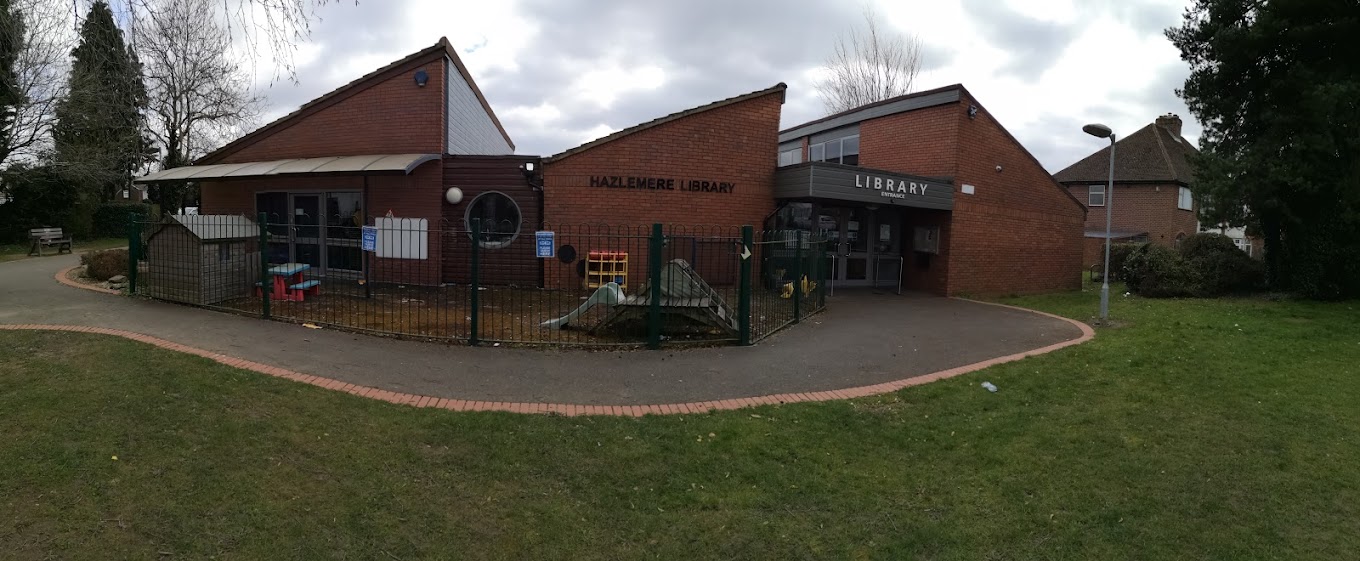
The solar energy system at Hazlemere Library is designed to generate renewable electricity for the building. It includes 48 solar panels, which are connected to two inverters and optimisers to maximise efficiency. The system also features a battery that stores extra energy, so it can be used when sunlight is low or during the night.
Energy Production and Consumption: The solar panels will produce enough electricity to power a significant portion of the library’s needs. Some of the energy will be used immediately, while any excess will be stored in the battery or exported back to the grid. This helps the library become more self-sufficient and reduces its reliance on external electricity sources.
Environmental Benefits: In addition to reducing energy costs, the system has a positive environmental impact. By using clean solar energy, the library will lower its carbon emissions by an amount equivalent to planting around 151 trees each year. This makes a meaningful contribution towards combating climate change by reducing reliance on fossil fuels.
System Performance: The solar system is expected to perform well throughout the year, with variations in energy production depending on the season. It is designed to remain efficient even in the face of shading or other minor losses.
Project Overview
System Capacity: 24.00 kWp
Annual Energy Production: 16.89 MWh
CO2 Emission Saved Annually: 3.27 tonnes
Equivalent Trees Planted Annually: 150
System Components
- Photovoltaic (PV) Modules: 48 JA Solar JAM66S30-500/MR (1000V) modules
- Inverters: 2 SolarEdge SE10K Home Wave Inverters
- Optimisers: 48 SolarEdge S500 Optimisers
- Battery Storage: 1 SolarEdge 23 kWh Home Battery (48V)
Design and Performance
The solar PV system at Hazlemere Library consists of 48 high-efficiency JA Solar modules with a total installed DC power of 24.00 kWp. The system features two SolarEdge SE10K inverters, optimally configured to handle the power output and ensure high efficiency. Additionally, 48 module-level power optimisers are installed to maximise energy harvest from each module.
Key Performance Metrics
- Maximum Achieved AC Power: 20.00 kW
- Annual Energy Production: 16.89 MWh
- Performance Ratio: 64%
- Performance Index: 704 kWh/kWp
Energy Consumption and Savings
The system supports both self-consumption and grid export. It generates a total of 16.89 MWh annually, with 56% (9.53 MWh) used for self-consumption and 44% (7.36 MWh) exported to the grid. The library’s total annual energy consumption is 13.15 MWh, of which 72% is supplied directly by the PV system. The remaining energy requirement is met through a combination of battery storage (23%) and grid import (28%).
Environmental Impact
The installation at Hazlemere Library contributes significantly to reducing carbon emissions. Annually, the system saves approximately 3.27 tonnes of CO2, which is equivalent to planting 150 trees.
Monthly Energy Production and Consumption
The system’s energy production and consumption vary monthly, with peak production in May and June, reaching up to 2,428 kWh. Consumption patterns indicate higher usage during the winter months, with the highest recorded in January (1,352 kWh).
| Month | Solar Production (kWh) | Consumption (kWh) | Self-consumption (kWh) |
|---|---|---|---|
| Jan | 419 | 1,231 | 412 |
| Feb | 649 | 1,280 | 624 |
| Mar | 1,257 | 1,049 | 860 |
| Apr | 1,895 | 1,134 | 1,088 |
| May | 2,336 | 1,098 | 1,098 |
| Jun | 2,428 | 968 | 968 |
| Jul | 2,394 | 952 | 952 |
| Aug | 2,137 | 925 | 925 |
| Sep | 1,494 | 961 | 914 |
| Oct | 1,009 | 1,052 | 816 |
| Nov | 533 | 1,145 | 533 |
| Dec | 343 | 1,352 | 342 |
System Losses
Various factors contribute to system losses, including shading, reflection, temperature, and electrical losses. The detailed loss diagram indicates an overall system efficiency, accounting for these factors and optimising performance accordingly.
Conclusion
The solar PV installation at Hazlemere Library demonstrates a successful implementation of renewable energy solutions, significantly reducing carbon footprint and promoting sustainable energy practices. The project not only meets a substantial portion of the library’s energy needs but also contributes to environmental conservation through CO2 emission reductions and equivalent tree planting.
This case study highlights the effectiveness of integrating advanced solar technologies and energy storage systems to achieve energy sustainability and resilience in public institutions.