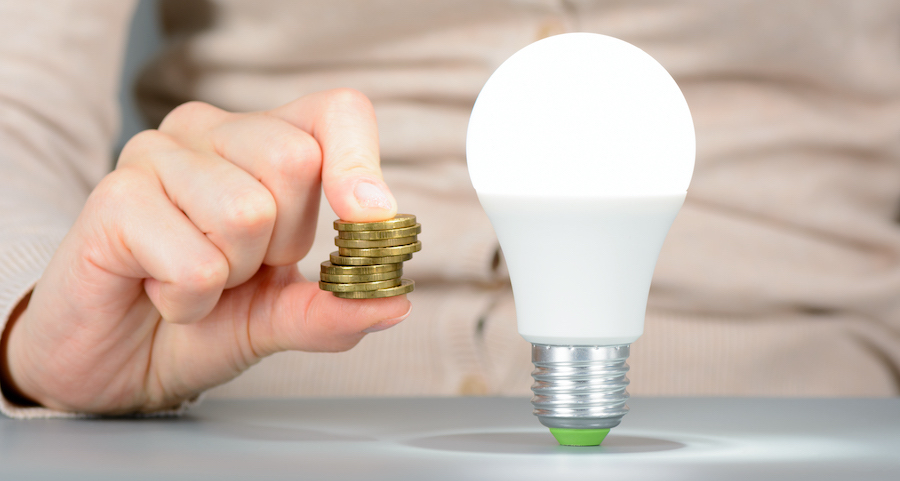
Switching to LED lighting can lead to significant energy savings and cost reductions. The exact amount you can save depends on several factors, including some obvious ones like the number of lights, their wattage and how long they’re on, but also ones that are less in your control, like the current energy costs in your area.
So, let’s consider some general estimates and factors that contribute to LED lighting savings:
Energy Efficiency: LEDs are highly efficient compared to traditional lighting options like incandescent bulbs or fluorescent tubes, meaning they consume significantly less energy while producing the same amount (or even more) light. On average, LEDs use around 75-80% less energy than incandescent bulbs. This translates into immediate energy cost savings. The Energy Saving Trust, says that if you switch from a traditional light bulb to an LED one, based on 562 hours of use over a year, you could save up to £15 per bulb, per year on electricity. When multiplied out, it’s clear that substantial savings can be made. But there are other non-electricity cost considerations too:
Lifespan: LED lights have a much longer lifespan than traditional bulbs. While traditional incandescent bulbs usually last around 1,000 hours, and compact fluorescent lamps (CFLs) around 10,000 hours, LEDs can last up to 50,000 hours or more. With longer-lasting bulbs, you save on replacement costs – and less manufacturing is so much better for the environment.
Maintenance Costs: an LED light’s longer lifespan means the maintenance and labour costs to businesses associated with constantly replacing bulbs are reduced.
Reduced Cooling Costs: LEDs produce less heat compared to traditional lighting options. Incandescent bulbs, for instance, emit a significant amount of heat, requiring additional cooling to maintain comfortable indoor temperatures. By using LEDs, you can be a bit more comfortable during the summer.
To get a more accurate estimate of your own personal potential savings, you would of course need to consider your specific lighting setup, including the number and wattage of the bulbs, the amount of time they’re on, and your current energy costs. We recommend asking a lighting specialist or getting an energy audit done for a details of the potential savings you can make in your own set up.